Blog
Smoothie or cold-pressed juice: which for breakfast, which after a workout
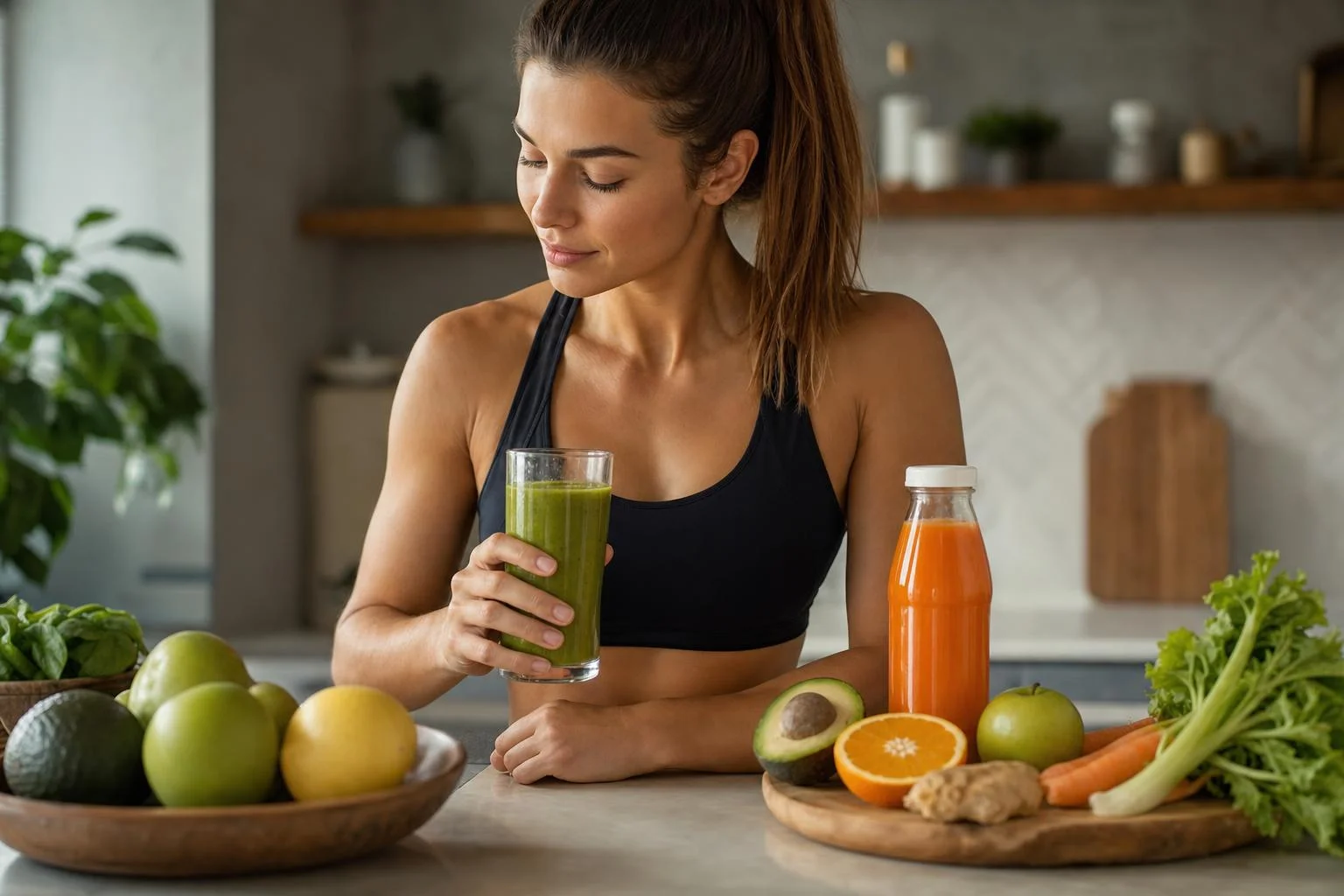
You are standing at the counter, looking at the brightly coloured drinks and wondering: smoothie or cold-pressed juice? Both are made from fresh fruit and vegetables, both look healthy, and the difference between them is bigger than it seems at first glance. It is not just about taste. It is about how full the drink will make you feel, how quickly the body takes in the nutrients and how long the energy lasts. Once you know that difference, it is easier to pick the right drink for the time of day and for what you need that day: a light but filling breakfast, or a quick top-up after a workout.
The basic difference: what happens to the fruit and vegetables
A smoothie is made by blending whole fruit and vegetables, fibre and all, into a smooth, thick drink. Nothing is removed. Everything that was in that piece of banana, apple or carrot ends up in the glass, just in a different form. That means a smoothie keeps the whole structure of the food, including the cellulose that the digestive system has to break down mechanically.
Cold-pressed juice is made differently. The ingredients are pressed under high pressure, which separates the liquid from the solids – that is, from most of the fibre and pulp. The result is a concentrated liquid full of vitamins, minerals and natural sugars, without the bulk the body has to break down before it can absorb anything. That is why cold-pressed juice feels lighter and works faster, while a smoothie has the texture and thickness of a proper meal.
This technical difference – fibre or no fibre – is the basis of everything else we will talk about: fullness, speed of digestion and how long the energy lasts. It is not that one drink is better than the other. They have different roles and different places in the day.
Fullness: why a smoothie fills you up and juice does not
The fibre in a smoothie slows down the emptying of the stomach and prolongs the feeling of fullness. When your glass holds a whole banana, a handful of berries and perhaps some oats or seeds, the body gets volume and structure, and it responds as it would to a meal, not to a drink on the side. That is why a smoothie is the natural choice when you need to replace breakfast or stretch the gap until your next meal.
Cold-pressed juice, on the other hand, has almost no fibre, so it passes through the digestive system faster and does not create the same feeling of fullness. That does not make it less valuable. On the contrary, that very lightness makes it an ideal addition to a meal or a refreshment between meals, rather than a replacement for one. Anyone who orders a glass of juice instead of breakfast and nothing else will very likely be hungry again within an hour or two.
For a guest in a hurry with no time to sit down, but who wants something that will really keep them going until lunch, a smoothie with banana, oats or plant-based yoghurt is a much smarter choice. For someone who has already had breakfast and wants a light, vitamin-rich refreshment, cold-pressed juice fills that role perfectly, without any heaviness in the stomach.
Speed of digestion and the feeling of energy
With no fibre to slow down absorption, the natural sugars in juice reach the bloodstream faster. You feel it as a sudden but short-lived ‘hit’ of energy, which is useful when you need a quick lift, for example right after an intense workout, when the body is burning through its glycogen stores and readily takes in simple sugars together with the electrolytes from fruit and vegetables.
A smoothie works more slowly but more evenly. The fibre, and often extras like oats, chia seeds or plant proteins, prevent the sharp spike and crash in energy. The feeling of fullness and steady energy lasts longer, which is exactly what you need in the morning, when you are just starting the day and need ‘fuel’ that will not run out within the hour.
For the same reason, athletes and people who exercise regularly often distinguish between what they drink before and after activity. Before a workout, something easy to digest is best, without too much fibre that could cause stomach discomfort during exercise. This is where cold-pressed juice, or a light juice topped up with water, comes into its own. After a workout, when the body is drained and needs both fluid and a fuller recovery of energy, a fast-absorbing juice works well, but so does a smoothie if there is a longer wait until the next meal.
Breakfast, before and after a workout: concrete guidelines
When choosing a drink, it helps to ask yourself two questions: how long until your next meal, and what does the body need most right now – fullness, speed or recovery? The answers lead naturally to the decision.
For breakfast, especially if you have no time for a proper meal, a smoothie is almost always the better choice, because it works as a small meal in itself. It fills you up, gives the body fibre and keeps energy steady until lunch. For a light morning alongside a breakfast that already has something solid in it – bread, eggs, a homemade biscuit – cold-pressed juice is an excellent addition that brings vitamins without heaviness.
Before a workout, you want something that digests quickly and does not weigh on the stomach during exercise. A smaller amount of cold-pressed juice, perhaps diluted with water, is usually more comfortable than a thick smoothie. After a workout, when the body wants both fluid and recovery, a good combination is juice straight after the activity for a quick top-up, and a smoothie a little later or with a meal for longer-lasting fullness and nourishment.
In the afternoon and evening, the choice often depends on how intense the day was and how long until the next meal. If the drink is standing in for a light snack, a smoothie will do that job better. If it is a refreshment while catching up with friends or strolling through town, cold-pressed juice is the lighter, more refreshing choice.
How to build a smoothie or a juice to match your goal
What goes into the drink changes its effect more than many people assume. A smoothie with too much sweet fruit, like mango and grapes, and nothing else can behave much like a juice: fast, but short-lived. Adding vegetables such as spinach or cucumber, together with a source of fat or protein like plant-based yoghurt, nuts or seeds, prolongs the feeling of fullness considerably and releases energy more evenly.
With cold-pressed juice, the mix of fruit and vegetables decides how ‘fast’ or how gentle the juice will be. Juices with a high share of fruit like apple and orange act faster because of the extra natural sugars, while juices built around vegetables – carrot, beetroot, celery, with just a little fruit for flavour – are gentler and raise energy less sharply, which makes them suitable for any time of day, including right before activity.
If you have a specific goal – a lighter breakfast that keeps you going until lunch, a quick top-up after a workout, or simply a refreshment while wandering around the Pazar, Split's Green Market – it is worth telling the staff at the juice bar. When the drink is made on the spot or to order, the ratio of fruit, vegetables and extras can be adjusted to what you need that day, rather than choosing purely by what looks best on the menu.
Common mix-ups worth clearing up
One of the most common mix-ups is the idea that cold-pressed juice is ‘healthier’ because it is more concentrated. Concentration also means more natural sugar in less liquid, so juice is best drunk in moderation and not as a replacement for water through the day. A smoothie, thanks to its fibre and larger volume, is usually sipped more slowly and in smaller mouthfuls, which also affects how the body responds.
The second mix-up is that a smoothie ‘must’ be the thicker, heavier choice and juice the ‘lighter’ one in every situation. In practice, the ingredients decide. A light smoothie of water, cucumber and a little fruit can be lighter than a thick juice made only from sweet fruit. So it is more useful to look at the ingredients and the purpose than at the category of drink itself.
The third mix-up concerns timing and freshness. Both drinks, when made from fresh, local fruit and vegetables without preservatives, work best when consumed straight after they are made. Cold-pressed juice in particular loses some of its qualities if it sits for long, while a smoothie holds its texture a little longer thanks to its thickness. But both are at their best freshly made, on the spot or straight to order.
A smoothie and a cold-pressed juice are not rivals. They are two tools with different purposes: one fills you up and keeps energy steady, the other refreshes quickly and is easy to digest. Once you know the difference, you choose by the moment of the day and your goal, not at random. If you are not sure what would suit you best, the best advice comes in person, over a glass of something freshly made in front of you. And that is exactly the point of a real juice bar.
Frequently asked questions
Is a smoothie better than cold-pressed juice for losing weight?
There is no single answer, because it depends on the ingredients and the amount, but thanks to its fibre a smoothie usually fills you up better, which makes it easier to control how much you eat over the day. Juice is useful as a light extra, not as a meal replacement, if long-lasting fullness is the goal.
Can I drink cold-pressed juice instead of breakfast every day?
Now and then it can be fine with something solid like bread or nuts, but as an everyday breakfast replacement juice usually does not keep you full for long enough. For a regular breakfast, a smoothie, or juice alongside solid food, keeps your energy up until lunch much better.
What is better to drink straight after a workout?
Straight after a workout, cold-pressed juice, perhaps diluted with water, quickly replaces fluid and natural sugars. A little later, or with a meal, a smoothie with added protein or seeds helps restore energy over a longer period.
Do a smoothie and a juice contain the same amount of vitamins?
Both are made from the same fresh fruit and vegetables, so they carry similar nutrients, but a smoothie also brings the fibre from the whole food, while juice gives a more concentrated liquid without fibre. The difference is more about structure and how fast they work than about the vitamin content itself.
Not sure which combination of fruit and vegetables suits your morning or your workout best? Drop by Pulpa at the Pazar in Split or get in touch, and we will happily put together a smoothie or cold-pressed juice made exactly for your needs.
Contact us