Blog
Nettle, mint and sage tea: when to drink them and what they do in autumn
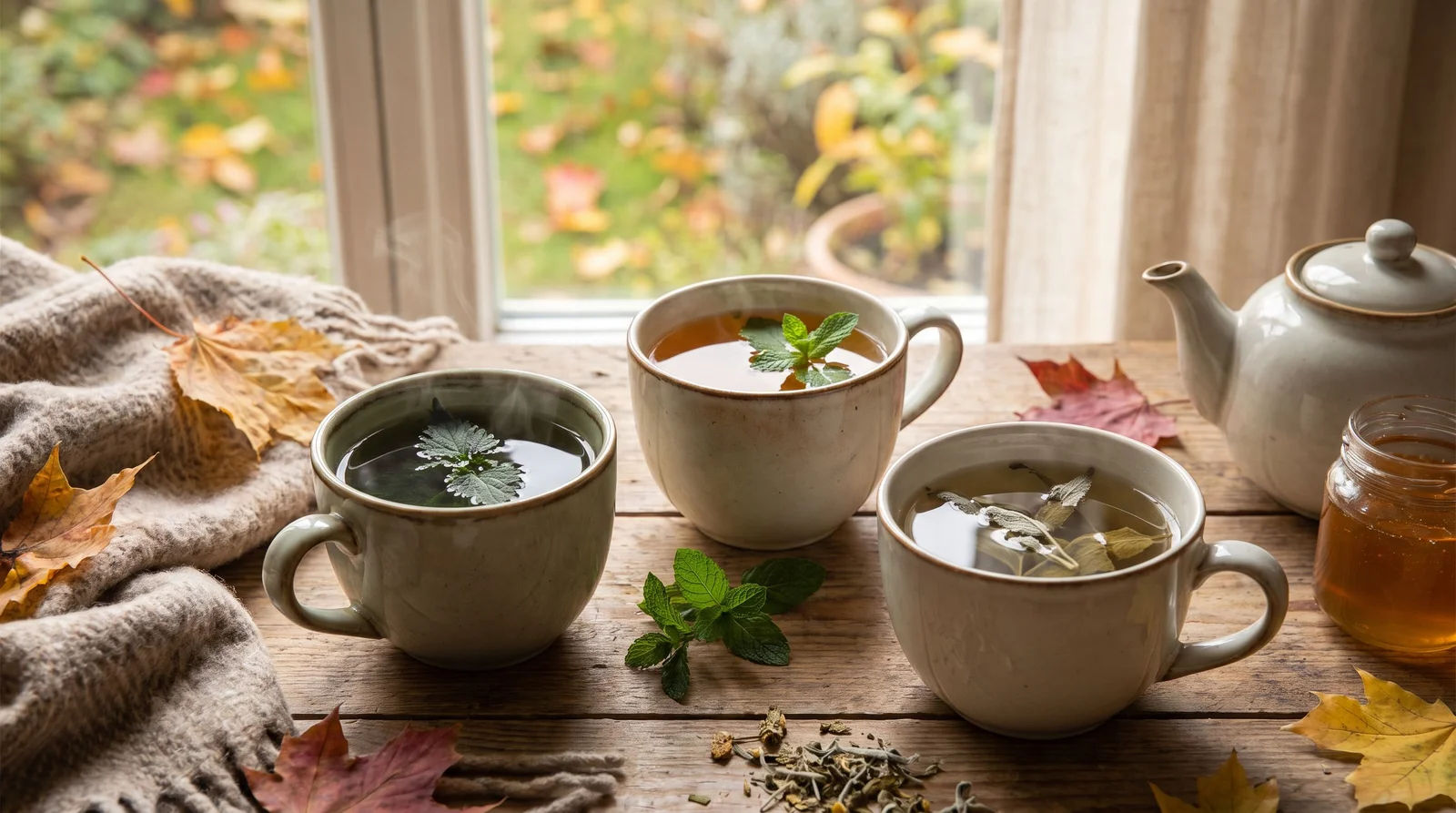
When the mornings at the Pazar, Split's Green Market, turn crisp and the sun no longer warms the way it did in July, the need for a hot drink comes naturally. That's when herbal teas come into their own — not as a substitute for a juice or a smoothie, but as their autumn counterpart: just as natural, just as free of additives, but suited to the colder part of the year. Nettle, mint and sage are three herbs traditionally picked by hand, each in its own season and for its own purpose, and knowing when and why to reach for each one helps you get the most out of every cup. This guide covers the basics for anyone just discovering herbal teas — no jargon, just clear advice for everyday use.
Why autumn changes the way we drink tea
In summer the body wants shade and hydration, from cold-pressed juices and watery fruit like watermelon or peaches. As soon as the temperature drops below twenty degrees or so and the mornings turn damp and misty, the body naturally looks for warmth from the inside. A hot drink then isn't just a pleasure but a small ritual that helps the body adjust to the change of season — it warms your hands, settles the stomach after heavier autumn meals and eases us into a day that starts more slowly.
Herbal teas have an advantage over classic black or green tea: most contain no caffeine, so you can drink them at any time of day, evenings included, without worrying about sleep. On top of that, each herb has its own particular profile — some calm, some wake you up, some help with the first signs of a cold — so choosing a tea becomes a question of the moment and the need, not just habit.
That's exactly why it's worth learning when to reach for nettle, when for mint and when for sage. The differences aren't cosmetic — these are different plant families, with different active compounds and different recommended moments in the day and the season.
Nettle: an autumn mainstay for energy and minerals
Nettle is traditionally picked in spring, when the young tips are at their most tender, but well-dried nettle keeps its properties for months, and autumn is the ideal time to drink it every day, because it replenishes what the body has used up over the summer. It's rich in minerals such as iron, calcium and magnesium, and is traditionally associated with a greater sense of vitality and with supporting the body at a time when the days are getting shorter and energy naturally dips.
Nettle tea tastes mildly earthy, with a light grassy note that recalls a freshly mown meadow. It isn't sweet or as pronounced as mint tea, so many people like it best in the morning, with a little honey or a slice of lemon, instead of the first coffee of the day or alongside it. That makes it a natural choice for a cold morning at the Pazar — while you choose the vegetables for the day's cooking, a warm cup of nettle warms you up and gives a calm, gradual energy without the sudden spike that caffeine brings.
It's worth noting that nettle isn't usually recommended in larger amounts during pregnancy, or in combination with certain blood-thinning medicines, so if in doubt it's always wise to ask a doctor or pharmacist before drinking it regularly.
Mint: freshness that settles the stomach after autumn meals
Mint is picked throughout the summer and early autumn, while the leaves are still full of essential oils — and it's those oils that give the familiar, refreshing coolness on the palate. Unlike nettle, mint works on the senses almost instantly — just breathing in the steam from the cup clears a stuffy nose in the season of first colds, and a sip of the tea soothes the stomach after a big autumn lunch of pasta, potatoes or meat.
That makes mint a natural choice for the afternoon, especially after a meal, when digestion slows and concentration dips. Many people also choose it instead of a sweet with their coffee — the gentle sweetness and freshness of mint tea often take the edge off the craving for more snacks. For those who work at a computer or spend the afternoon talking with customers, a cup of mint tea works almost like a short breathing break, without the stimulating effect of caffeine.
Mint also combines well with other herbs — a little mint added to nettle tea softens its earthiness and makes it easier to drink for those new to herbal teas, while mint and sage together in the evening have a soothing effect on the throat and breathing.
Sage: protection for the throat and airways on colder days
Sage is traditionally picked later in the season, when the leaves are older and richer in essential oils and tannins, which give it its characteristic, slightly bitter and intensely aromatic taste. It's precisely because of this high content of active compounds that sage has been used for centuries to support the throat and upper airways — so it's no coincidence that it's most in demand in autumn, when the first colder days bring a scratchy throat, hoarseness or a dry mouth.
Sage tea works best drunk warm, in small sips, almost like rinsing the throat from the inside — many people warm a cup in the evening before bed or at the first sign of a cold. Because of its strong taste, sage is rarely drunk on its own in large amounts for days on end; it's usually paired with honey or lemon, or used in smaller amounts in a blend with mint, which softens its bitterness.
As with nettle, larger and prolonged amounts of sage aren't recommended for pregnant or breastfeeding women, because of natural compounds that in high concentrations can affect hormonal balance. For occasional, moderate use in the autumn months, though, sage is a tried and safe choice for most adults.
How to recognise good hand-picked herbs
The difference between industrially dried tea in bags and hand-picked, naturally dried herbs is clear at first sight and first sniff. Good nettle, mint or sage has a clear, distinct scent as soon as you open the jar — if the scent is faint or barely there, the herbs have probably been sitting too long or were dried at too high a temperature, which drives off much of the essential oils.
Colour is the second indicator: the leaves should keep their natural green shade, with no brown or yellowed parts, which shows they were dried properly and quickly right after picking. Hand-picking also means only healthy leaves are chosen, without stalks, weeds or damaged leaves, which with mass machine harvesting often end up in the same bag.
Origin matters just as much — herbs picked in clean, unsprayed places, away from roads and from farmland treated with pesticides, have a completely different profile of aroma and safety from herbs of unknown origin. That's why it's worth buying tea from someone who knows, and can explain, where the herbs come from and when they were picked.
The basics of making tea at home
Making herbal tea seems simple, but a few details separate an average cup from one that really brings out all the flavours and useful compounds in the herb. Water temperature is key: the water shouldn't be at a rolling boil when you pour it over the leaves, because too high a temperature destroys the delicate essential oils, especially in mint and sage. Ideally, boil the water and let it stand for ten to fifteen seconds before pouring it over the herbs — that gives you roughly 85 to 90 degrees.
Steeping time is just as important. Nettle, with its tougher leaf, needs a longer steep, between seven and ten minutes, to release its minerals. Mint and sage, with softer, oilier leaves, open up after just five to seven minutes — steeping them longer only adds bitterness without any extra benefit. Always cover the cup or pot while steeping, otherwise the essential oils escape with the steam.
As a rough guide to quantity, use one to two teaspoons of dried herbs per cup of 200 to 250 ml of water. If you're just getting to know the flavours, start with less and add more next time if needed. Honey is always best added once the tea has cooled a little, because too high a temperature destroys some of its beneficial properties.
Finally, remember that the same herbs can be steeped a second time within fifteen minutes or so for a milder second cup — a practical way to prolong the pleasure without throwing the leaves away after a single serving.
Which tea to choose for each moment of the day
A practical way to think about herbal teas is to link each herb to a real-life situation rather than to strict rules. For a cold morning at the Pazar, while you pick out fresh vegetables and think about the day ahead, nettle gives a gradual, mineral-rich energy that sits lightly on the stomach before breakfast. For the first signs of a cold or a sore throat, warm sage in small sips works almost like a natural compress from the inside, especially in the evening before bed.
For the afternoon slump, that moment when concentration fades and the body wants something refreshing instead of yet another coffee, mint is close to ideal — it wakes the senses with its scent rather than with stimulants, and gently helps digestion after lunch. All three herbs together in one blend, in smaller proportions, make a balanced tea you can drink throughout the day with no particular purpose, while the single herbs stay reserved for the moments when their specific effect is really needed.
Autumn is the season when the body asks for a slower pace, and a warm cup of natural tea is often the simplest way to give it what it wants. Nettle, mint and sage each answer in their own way to the needs of the colder part of the year — from morning energy to an afternoon pick-me-up to evening care for the throat — and that variety is exactly what earns them a place in your daily routine. Choose them by the moment, prepare them with care, and let the freshness of hand-picked herbs — just like the freshness of the fruit in our juices — be what you taste in every sip.
Frequently asked questions
Can I drink nettle, mint and sage tea every day?
Moderate daily consumption of one to two cups is generally safe for healthy adults. With sage, occasional use is recommended rather than continuous use in larger amounts over several weeks, while nettle and mint are milder and better suited to more regular drinking.
What's the difference between fresh and dried herbs for tea?
Fresh herbs give a more intense, livelier aroma, but dried hand-picked herbs, stored properly in a sealed container away from light and moisture, keep much of their essential oils and scent for months and are more practical for everyday use at home.
Can you drink sage tea during pregnancy?
Larger and frequent amounts of sage are generally not recommended for pregnant or breastfeeding women, because of natural compounds that can affect hormonal balance. In that case it's better to choose the milder nettle or mint, and to check with a doctor first.
How long should herbal tea brew, or rather steep?
Nettle needs a longer steep of seven to ten minutes because of its tougher leaf, while three to seven minutes in a covered cup is enough for mint and sage, so the essential oils don't escape with the steam.
If you'd like to try our hand-picked nettle, mint and sage teas, or find out which herb best suits your autumn routine, drop by our stand at the Pazar or get in touch to arrange something in advance.
Contact us