Blog
How to build a cold-pressed autumn juice: a step-by-step Pazar guide
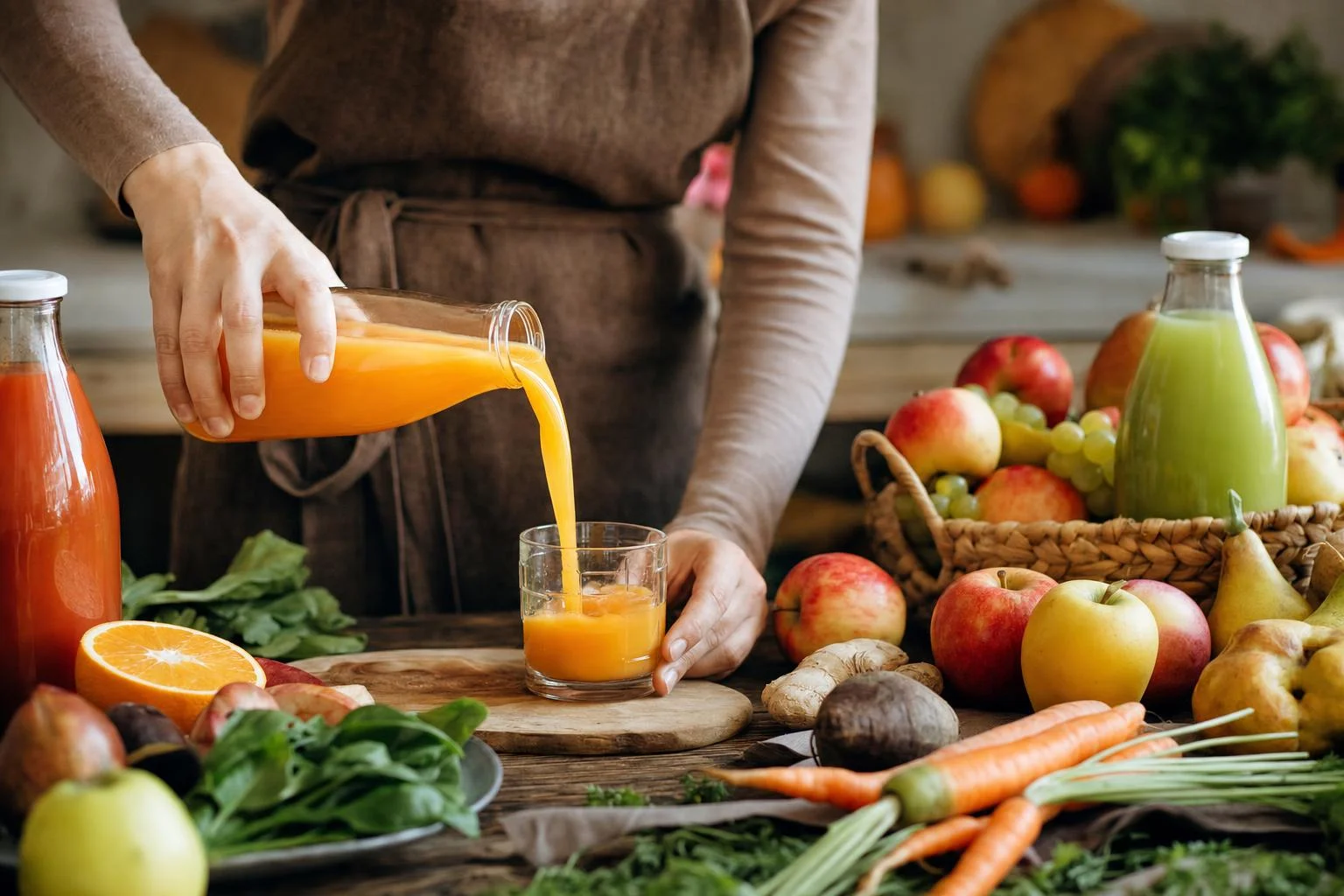
September and October bring a completely different range of flavours to the Pazar, Split's Green Market. Instead of watermelons and peaches, the stalls fill up with apples, pears, beetroot, carrots and pumpkin. For cold-pressed juice this is actually the richest time of year. Autumn produce is denser, has more natural sugar and an earthy depth of flavour that goes beautifully with aromatic extras like ginger and turmeric. The trouble is that many people at home end up with a juice that is too sour, too sweet or simply flat, with no balance. In this guide we walk you through the logic of building an autumn juice, step by step, with real proportions and three combinations you can put together right now from what Split's family farms have on offer.
Why an autumn juice needs a different approach from a summer one
Summer fruit like peaches, apricots and watermelon is high in water and gently acidic, so summer juices are easy to put together and almost balance themselves. Autumn produce works differently. Apples, pears, carrots, beetroot and pumpkin have less water, more fibre and a much denser, more concentrated sweetness. That makes the proportions far more important than in summer, because a juice can easily turn out too heavy, too earthy or unpleasantly thick if it is not balanced with enough liquid and acidity.
The second difference is temperature. When it gets colder outside, the body naturally wants warmer, spicier flavours. That is why autumn juices work much better with ginger, cinnamon or turmeric than with the cool, minty notes that dominate in summer. The third difference is what is in season. In September and October the family farms at the Pazar have root vegetables and apples in full swing, while citrus is only just starting to appear, so at this time of year lemon is better used as an accent than as a base.
That is why an autumn juice is best built on a clear three-layer structure, base, aromatic and greens, rather than by throwing together whatever happens to be in the basket. The structure is easy to remember and works for almost any combination you might want to make at home.
Step 1: choose your base and keep it at 70 to 80 percent
The base is the ingredient that makes up most of the juice and sets its basic texture and sweetness. In autumn the three best bases are apple, carrot and beetroot. Each has a different character, so your choice of base really defines the whole juice. Apple gives a light, refreshing sweetness and the most juice per kilo, which makes it ideal for anyone new to juicing who wants a safe, drinkable result. Carrot brings a thicker, velvety texture and a mild natural sweetness with no sharp edges. Beetroot has the most intense profile, earthy and slightly sweet and mineral, and is better used as a smaller part of the base rather than on its own.
The rule is that the base makes up roughly 70 to 80 percent of the total volume. With apple that is simple. It can go up to 80 percent because it is mild and does not take over. With beetroot it is the other way round. Even when beetroot is the 'main' base, it should be no more than 40 to 50 percent of the base, with the rest made up of apple or carrot, because a lot of pure beetroot quickly becomes heavy on the palate and on the stomach.
A practical tip from the Pazar: choose apples that are a little firmer and sharper (like Jonagold or older local varieties) rather than fully ripe and soft, because firmer apples give a clearer juice and press better without too much foam. Carrots and beetroot should be firm, with no soft spots. That is a sign of freshness, and it directly affects how much juice you get.
Step 2: the aromatic, a small amount with a big effect
The aromatic is the ingredient that lifts a juice from 'nice' to 'memorable', and it is used in small amounts, usually 3 to 8 percent of the total volume. The most common autumn choices are ginger, lemon and turmeric, and each has a specific job that is worth understanding before you add it.
Ginger brings warmth and a gentle heat that goes perfectly with the density of carrot and beetroot. A thumb-sized piece (about 10 to 15 grams) per litre of juice is usually enough, and you can go up to 20 grams for a stronger kick. In an autumn juice, lemon is there mainly for balance, not as the main flavour. Its acidity stops a juice of apple, carrot and beetroot from tasting too sweet, and it helps keep the colour brighter by slowing oxidation. Half a lemon per litre is usually enough.
Turmeric is more particular. The fresh root (not the powder) gives an earthy, slightly peppery and faintly bitter note that goes extremely well with apple and carrot, but it easily takes over the whole juice if you overdo it. Start with a small piece of 2 to 3 grams per litre and add more in the next batch once you know how you like it. It is a good idea to press turmeric together with a little black pepper or ginger, as this makes its active compounds easier for the body to use.
Step 3: the greens, freshness and nutritional depth
The third layer is the greens, which play a different role in an autumn juice than in summer. In summer, mint and basil dominate for their freshness. Autumn makes room for slightly bitter, nutrient-rich greens like Swiss chard, kale or parsley, which go very well with the earthy notes of beetroot and carrot. The greens usually make up 5 to 15 percent of the total volume, enough to add depth and micronutrients but not so much that the juice turns bitter or grassy.
If you are just starting out, begin with a small amount of parsley (a handful of leaves per litre of juice). It has a milder, fresher taste than kale and fits more easily into combinations with apple. Kale and chard are stronger and work best when the base is mostly apple, which softens their bitterness. It is worth saying that the greens are optional. A juice of apple, carrot, beetroot, ginger and lemon works perfectly well without them. But they add another layer for anyone who wants the 'advanced' version.
Step 4: the order of pressing, and why it matters
The order in which ingredients go through a cold press affects both how much juice you get and the final texture. The general rule: start with the harder, fibrous ingredients like carrot and beetroot. Then add the greens, which press best when 'wrapped' or pushed through together with harder pieces, otherwise they slip through the press without really being squeezed. Follow with the apple, which is so full of water that it rinses the press and picks up what is left of the earlier ingredients. Finish with the ginger, turmeric and lemon, so their strong aroma spreads evenly through the whole juice instead of ending up only in the first glass.
This sequence also makes the press easier to clean. Starting with the hard root vegetables and ending with the softer, waterier apples means the sieve is less likely to clog with fibre halfway through, which is a common reason home presses 'stall' mid-way. A cold press (unlike a centrifugal juicer) turns slowly, so it is important to cut the ingredients into strips or smaller pieces that slide easily through the chute, without forcing them. Pushing too hard warms the ingredients and partly undoes the benefit of cold-pressing.
Once pressed, the juice is best drunk straight away or chilled in a sealed bottle filled to the top (with no air), because autumn juices, especially those with beetroot and apple, oxidise faster than citrus. Stored like this in the fridge, the juice keeps its quality for up to 48 hours, but you get the most nutrients and flavour within the first few hours of pressing.
Three tried-and-tested September combinations from the Pazar
All three combinations follow the base-aromatic-greens principle and use only produce that is in full season at the local family farms in September and October.
- Golden autumn: 4 apples, 2 carrots, a piece of ginger (10 g), half a lemon. A classic, easy-drinking combination rich in beta-carotene and vitamin C, ideal as an everyday juice.
- Rubin from the Pazar: 3 apples, 1 medium beetroot, 1 carrot, a piece of ginger (10 g). A stronger, earthy combination that supports circulation and energy, great before or after exercise.
- Green and gold: 4 apples, 1 carrot, a handful of parsley or a few Swiss chard leaves, a small piece of fresh turmeric (3 g), half a lemon. The most layered version, with the anti-inflammatory potential of turmeric and the freshness of the greens.
Common mistakes when juicing autumn produce at home
The most common mistake is too much beetroot compared with the rest of the juice. Beetroot is strong and easily drowns out every other flavour, and in larger amounts it can upset the stomach of anyone who rarely eats it. The second common mistake is using overripe fruit, which gives a cloudy juice that oxidises quickly and tastes weaker. For cold-pressing it is always better to choose firmer, fresher pieces than the ones that are 'ready to eat now'.
The third mistake is leaving out the sour element, such as lemon, which often makes an autumn juice too sweet and hard to drink in any quantity. The fourth is a technical one: pressing pieces that are too big, which overloads the machine and reduces the yield. It is always worth cutting the ingredients to suit the chute of your press. Finally, many people forget that fresh spices like ginger and turmeric need to be peeled, or at least washed well (and scraped if needed), because the skin can bring in a bitterness that throws off the balance of the whole combination.
Putting together a good autumn juice is not a matter of luck but of simple logic: a clear base, a well-judged aromatic accent, the right amount of greens and the correct order of pressing. Once you have this structure down, you can experiment with almost anything you find at the Pazar in September and October, adjusting the proportions to your own taste and needs. And if you would rather leave the combining to experienced hands and simply enjoy a freshly pressed juice, with no prep and no press to clean, that is exactly what Pulpa is here for.
Frequently asked questions
What is the best ratio of fruit and vegetables for an autumn cold-pressed juice?
A good starting point is 70 to 80 percent base (apple, carrot, beetroot), 5 to 15 percent greens and 3 to 8 percent aromatic, such as ginger, lemon or turmeric. The ratio is flexible and you can adjust it to your own taste after a few tries.
Can I drink beetroot juice every day?
Beetroot is very concentrated, so it is better to keep it to a smaller share of a mixed juice (up to 40 to 50 percent of the base) a few times a week, rather than a large amount every day, especially if you are not used to it.
How long does cold-pressed juice stay fresh?
With no preservatives, cold-pressed juice is best drunk the same day, and within 24 to 48 hours at most if it is kept chilled in a sealed bottle filled to the top, with no air.
Should I peel apples, carrots and beetroot before pressing?
Apple and carrot skins can stay on, as they contain fibre and nutrients. Just wash them well. Beetroot is best peeled thinly, because its skin can add an earthy bitterness. Ginger and turmeric should always be peeled or scraped well before pressing.
If you would like to try these autumn combinations without the hassle of shopping and pressing, drop by Pulpa's juice bar at the Pazar or get in touch to order in advance. We make everything fresh, on the spot, from local family farm produce.
Contact us