Blog
The most common home juicing mistakes and how to avoid them
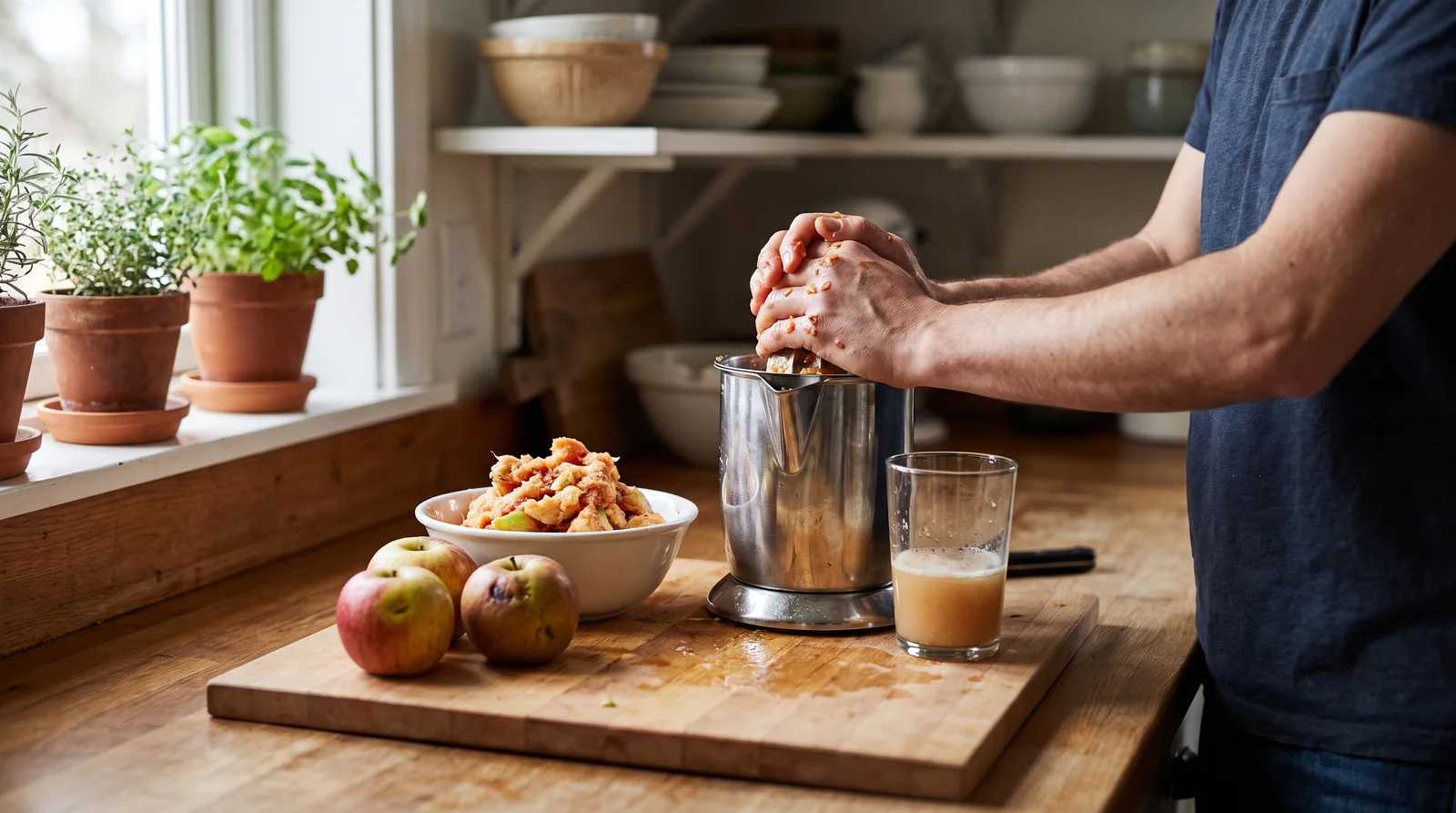
Juicing at home sounds simple: put the fruit and vegetables in the juicer, press the button, done. That is exactly why so many people are disappointed with the result. The juice goes brown quickly, turns out too sweet, or just does not have that fresh, lively taste you get in a proper juice bar. The difference is rarely about expensive equipment. It usually comes down to a series of small slips repeated day after day. Below is a round-up of the most typical mistakes home enthusiasts make, with concrete fixes you can apply straight away, compared with the professional approach we use every day in our work with cold-pressed juice.
Not washing the fruit and vegetables properly
One of the most common and most dangerous mistakes is giving the produce a quick rinse under the tap for just a couple of seconds. The skin of an apple, a cucumber or a beetroot carries soil, pesticide residue, wax and microorganisms, and pressing simply transfers them into the juice. The machine does not filter them out; it concentrates them. With root vegetables like carrot and beetroot the problem is even worse, because soil gets into the tiny cracks in the skin that are hard to clean with an ordinary rinse.
The fix is to soak the produce systematically in cold water for about ten minutes, adding a spoonful of vinegar or bicarbonate of soda for tougher skins if needed, and then scrub it with a stiff vegetable brush. Leafy greens like kale and spinach should be washed in several changes of water until no more grit settles at the bottom of the bowl. Citrus fruit used with the peel should always be scrubbed extra well, or have its thin outer layer peeled off, because that is where residue from shelf-life treatments can sit.
In a professional juice bar this step is never skipped, because large quantities of produce are handled every day and any contamination shows up immediately in the taste and look of the juice. The produce is bought from trusted local family farms precisely to keep the use of crop treatments to a minimum, but washing remains a compulsory step whatever the origin of the fruit and vegetables.
Too much sweet fruit in one juice
Home enthusiasts very often reach for a combination of apples, pears, grapes and oranges, because that juice tastes good and children accept it. The problem is that you end up with a drink with an extremely high share of natural sugars in a small glass, without enough fibre to slow down the absorption of glucose. The result is a sharp spike in energy and an equally fast drop, and in the long run a palate used to nothing but sweet combinations.
The practical fix is a rule of proportion. At least half the glass should be low-sugar vegetables such as cucumber, celery, a little green apple, chard or green pepper, and only the smaller part sweet fruit, which acts as a natural sweetener. A squeeze of lemon or some ginger lifts the flavour without extra sugar and at the same time keeps the juice fresh for longer. Your own experience will quickly show that a juice with less fruit and more vegetables fills you up just as well and does not cause the heartburn or bloating that many people wrongly blame on the juicer.
In a juice bar, juices are routinely built on exactly this principle. Combinations are planned so that there is a balance of sweetness, acidity and bitterness, rather than letting whatever is sweetest dominate. That way the guest gets a drink full of nutrients, not a liquid stand-in for ice cream.
Leaving the juice out in the air for too long
Many people make their juice in the morning and leave it on the kitchen counter while they get ready for work, or pour it into a bottle and take it with them without chilling it. Contact with oxygen starts oxidation, which breaks down vitamin C and other delicate nutrients. The visible result is a darkening colour and a change in taste, which often turns bitter or slightly fermented after just an hour or two at room temperature.
The best thing is to drink the juice straight after pressing, within fifteen to twenty minutes, when its nutritional value is highest. If that is not possible, pour it immediately into a glass bottle filled right to the top, so the air is pushed out, close it tightly and put it in the fridge. A few drops of lemon juice also slow down oxidation, thanks to the antioxidant effect of vitamin C.
Cold-pressed juices, unlike those from a centrifugal juicer, have less contact with air during pressing, so they stay fresh for longer. But that does not mean they can be left in the warmth or the sun. That is exactly why juices in a juice bar are made on the spot or just before an order is collected, so the guest gets the product at its best, not after it has waited for hours in a glass on the counter.
The wrong combinations of vegetables and citrus
Citrus fruits like orange, lemon and grapefruit contain citric acid, which can cause curdling or an unpleasant taste when combined with certain vegetables, especially with dairy add-ins or with vegetables rich in oxalates, like spinach. Another common mistake is mixing citrus with a large amount of root vegetables like beetroot or carrot in the wrong proportion. The acidity of the citrus spoils the natural earthy sweetness of the roots, and the juice turns out unpleasantly sharp.
A rule worth remembering: citrus goes best with other fruit or with milder, watery vegetables like cucumber, while root vegetables pair better with apple, pear or ginger than with large amounts of lemon or grapefruit. If you want a fresh note with beetroot or carrot, a spoonful of lemon juice per glass is enough, never a whole squeezed lemon.
Citrus peel also contains essential oils that can make the juice bitter in large amounts, so if you use the whole fruit it is best to remove the white pith before pressing. The professional approach relies on tested recipes in which the ratio of citrus to the other ingredients has been worked out in advance, to avoid this bitterness and to give every glass an even, balanced flavour.
The wrong proportion of root vegetables
Beetroot, carrot and celeriac are very dense and intensely flavoured, so many people add too much of them, thinking the juice will be more nutritious that way. In practice, the result is a juice that is too heavy, earthy-tasting and harder to digest. With beetroot, it also visibly changes the colour of your stool and urine, which often worries people who are not expecting it, even though it is a harmless effect known as betalain pigmentation.
A good starting guideline is that root vegetables should make up no more than a third of the total volume of the juice, with watery vegetables or fruit making up the rest to soften the intensity. Beetroot in particular should be introduced gradually, starting with a small amount like half a small beetroot per glass, because its effect on digestion and blood pressure can be pronounced in people drinking it for the first time or in large amounts.
Root vegetables should also be cut smaller before they go into the juicer, because their fibrous structure jams the mechanism more easily and reduces the amount of juice you get out of them. More experienced enthusiasts combine the firmness of roots with softer ingredients like cucumber or apple, which makes pressing easier and gives a more even flow through the filter.
Poor choice and storage of the raw produce
The finished juice can never be better than the produce that goes into the juicer. Overripe, wilted produce, or produce kept too long at room temperature, loses a large share of its vitamins before it even gets near the juicer. Many people keep fruit and vegetables on the counter for days instead of in the fridge, which speeds up the loss of nutrients and the growth of microorganisms.
Best practice is to buy smaller amounts of fresh fruit and vegetables more often, ideally in season and from local producers, and keep them in the fridge until you are ready to use them. Leafy greens and berries spoil especially fast and should be used within a few days of buying, while root vegetables and apples can be stored for longer.
Working with local family farms and buying fresh produce daily is precisely why the juices in a proper juice bar have a more intense, cleaner taste than those made at home from produce that has travelled for days and waited on a shelf. Investing in good, fresh produce always pays off more than investing in a more expensive juicer.
As you can see, the biggest differences between a disappointing homemade juice and an excellent one are not about the price of the equipment, but about disciplined washing, sensible proportions and drinking the juice soon after pressing. And if you would rather not choose, wash, chop and measure every day, but still want a safe, balanced, freshly made cold-pressed juice or smoothie from local fruit and vegetables, we will happily make one for you on the spot or to order. Drop by and see us at the Pazar, Split's Green Market, or get in touch in advance to arrange an order to your liking. Freshness is always guaranteed.
Frequently asked questions
Why does my homemade juice go dark and change taste so quickly?
That is oxidation, caused by contact with oxygen. Drink the juice straight away, or put it in the fridge immediately in a tightly closed bottle with no air in it, with a drop of lemon juice to slow the process down.
How much fruit and how much vegetable should go into one juice?
A good guideline is for vegetables to make up at least half the volume, with fruit and root vegetables like beetroot or carrot making up the rest, so the juice is not too sweet or too heavy.
Is it OK to drink beetroot every day?
It can be, but in smaller amounts introduced gradually, because it has a strong effect on digestion and blood pressure. It is best combined with apple or carrot, rather than overdoing it with pure beetroot juice.
Is cold-pressed juice better than juice from a centrifugal juicer?
Yes. Cold pressing heats the produce less and reduces contact with air during juicing, which better preserves the vitamins, minerals and natural flavour of the fruit and vegetables.
Have a question about making juice, or want to order in advance? Get in touch by phone, email or through the contact form.
Contact us